
Tracing a Century of Memory
A 9-Day, 8-Night Field-Research Learning Journey | Chengdu → Baoxing → Xiaojin → Danba → Tagong → Luding → Chengdu, Ages 15+, International School Groups & Customisable Programmes
Programme Overview
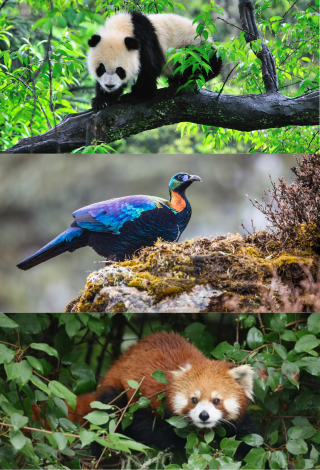
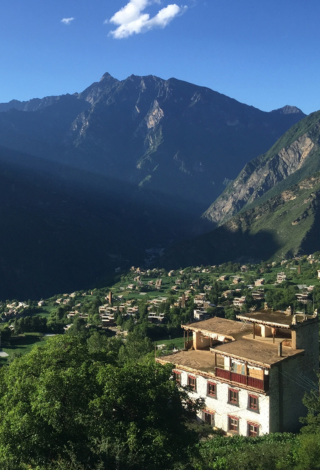
The Hengduan Mountains run the length of China's southwest. They are one of the world's great biodiversity hotspots and the heartland of the "Tibetan–Yi Corridor", where Han, Tibetan, Qiang and Yi communities have lived side by side for millennia. What makes this land singular is that it is also a century-old arena of encounter between Chinese and Western civilisations: from the late 19th century, Western explorers, naturalists and missionaries entered these valleys and left deep marks of exchange behind them, turning the region into a rare global sample of nature and culture growing together.
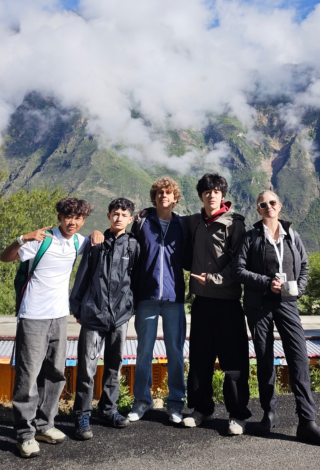
A hundred years on, the Hengduan Mountains and the Jiarong Tibetan lands still carry that cross-civilisational DNA — and still face the twin tasks of protecting ecosystems and passing on culture. This "Tracing a Century of Memory" field-research programme takes a century of East–West exchange as its historical backdrop and the deep co-construction of ecology and culture as its research spine. Following the footsteps of those who came before them, students enter the field as researchers, using ecological patrol, community oral-history interviews, historical archive comparison and infrared camera monitoring as their evidence — and leave as systems thinkers and actors rather than outside observers.
Driving Question: "How have people and nature shaped one another across a century of encounter in the Hengduan Mountains — and what does this teach us about our own relationship with the natural world?"
Key Highlights

Itinerary
Afternoon · Arrival and urban observation. Meet in Chengdu, then take a "sociology of space" lens into Wuhou Heng Street — the city's largest Tibetan and Yi quarters — and observe how these communities build their own daily space at the centre of a great inland metropolis. Compare how migrant neighbourhoods such as Chinatown and Little Italy formed in New York and London.
Late afternoon · Academic grounding. Join a lecture by a leading scholar of the Tibetan–Yi Corridor — "The Tibetan–Yi Corridor: Where Cultural Diversity and Biodiversity Meet" — and learn the methods and ethics of field research.
Evening · Sichuan opera. Watch a face-changing performance.
Morning · Crossing habitats and the transition belt. Travel towards Giant Panda National Park, mapping the vertical transition band along the way and recording how ecology and landform shift from the Chengdu Plain to the western highlands.
Afternoon · Tracing the national treasure. At the research camp, observe giant pandas at close range and study their species traits, behaviour, population status, protection policy and survival strategies.
Afternoon · Natural history under a dialectical lens. Visit the century-old Catholic church, and trace the footsteps of Armand David, the French missionary-naturalist who scientifically discovered the giant panda in 1869.
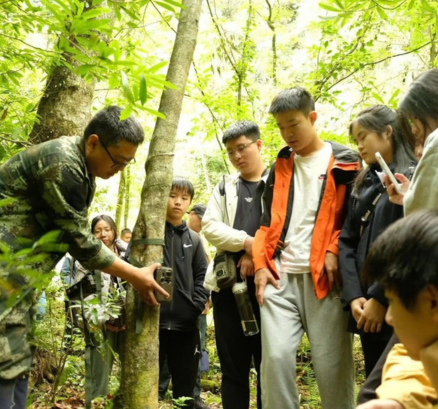
Evening · Night patrol. Accompany national-park rangers and learn how a modern protected area uses drones, infrared cameras and thermal imaging to support species protection.
Morning · Guobayan restoration mining site. Study a demonstration site of ecological restoration of a former mine, and learn how locals are restoring a mining area at the same time as protecting the core zone of Giant Panda National Park.
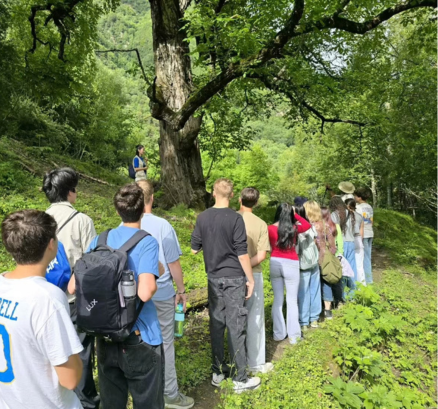
Morning to afternoon · Field patrol. Follow rangers deep into the vertical forest belts of the Qingyi River headwaters. Learn to read wildlife droppings and tracks and to set infrared cameras in the forest.
Evening · On to Xiaojin. Transfer by coach to Xiaojin and check in.
Morning · Snowline hike. Walk Shuangqiao Valley in Siguniang Mountain and observe vegetation and glacial landforms at different altitude bands, confronting the fragility of alpine ecosystems under a warming climate.
Afternoon · Community evidence. Using sociological interviewing methods, interview "Rose Sister" about how the Jinshan Rose project has raised farming households' incomes through an ecological alternative industry.
Evening · On to Danba. Travel to Danba and check into a Jiarong Tibetan guesthouse.
Morning · The Himalayan view of nature. Take part in a traditional mountain-worship ceremony and use it to examine the ecological wisdom inside "sacred mountain" belief. Compare the modern Western view of nature as a resource for human use with the eco-philosophy of Tibetan communities.
Morning · A forest school in the Tibetan lands. Visit the region's first forest school and study its "eco-service economy" model — to understand how a forest school can empower a protected-area community's sustainable development.
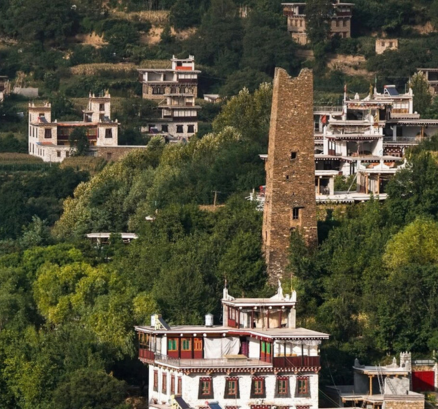
Afternoon · Living heritage. Visit the thousand-year-old watchtower, and consider new ways of transmitting cultural heritage.
Morning · Inside the ancient watchtowers. Climb a thousand-year-old tower with its inheritor and try the walling technique by hand, exploring the seismic engineering and defensive intelligence behind the "land of a thousand towers" that has stood through centuries of earthquakes.
Afternoon · Intangible heritage in practice. Learn Jiarong mountain songs and print your own prayer flags. Deconstruct the symbols on the wind-horse flag — earth, water, fire, wind and space.
Morning · Into Tagong. Look out to Yala Snow Mountain across the Tagong grasslands, interview pastoral families and investigate how climate change is degrading pasture and traditional livelihoods.
Midday · Lunch at the guesthouse. Talk with herders and learn about pastoral life and nomadic culture.
Afternoon · The Green Station. Visit the Zheduo Mountain Green Station and learn from the frontline civil-society groups that have held the line at the headwaters of the Yangtze for thirty years.
Evening · Arrive in Luding. Check in at a riverside guesthouse.
Morning · Return to Chengdu. Travel back to the provincial capital with the raw, first-hand field material gathered across seven days in the Hengduan Mountains, the wilderness and the Tibetan lands.
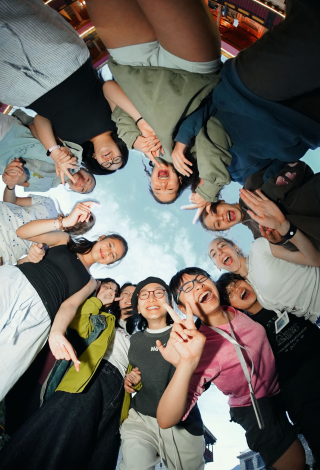
Afternoon · Community visit. Visit an innovative education high-school community in Chengdu, join workshops and activities alongside students of the same age and talk with them as peers.
Afternoon · Sharing session. Talk with community students, share what you saw in the field, and complete the shift from observer to narrator.
Morning · City walk (choose one). A. People's Park — try a gaiwan tea, watch the matchmaking corner and the morning-exercise culture, and read Chengdu's "slow life" and its unusually strong neighbourhood bonds. B. Taikoo Li — observe how historic buildings are reactivated and how commerce, innovation and urban renewal meet, and discuss how China keeps both the material form and the spirit of its cultural veins through ultra-fast urban change.
Morning · Closing ceremony. Each team gives a presentation of this trip.
Afternoon · Departure. Transfer to Tianfu Airport.
Safeguarding & Practical Care
The programme is designed with student wellbeing and safety in mind. All routes, venues and activities are planned in advance, with trained staff accompanying students throughout the journey.
Safety
- Staff-to-student ratio of at least 1:5
- Programme leaders, subject mentors and safety coordinators on site
- 24-hour emergency response
- Pre-inspected venues and activity plans
Licensed transport and professional drivers
Health
- Full programme insurance coverage
- Meals included along the route
- Dietary requirements and allergies accommodated with advance notice
Accommodation
- Accommodation arranged in quality hotels or guesthouses, depending on location
Detailed safeguarding arrangements, insurance information and risk assessment procedures are available upon request.
FAQ
This programme is designed for students aged 15+ interested in biodiversity, field research, cross-cultural dialogue, living heritage and systems thinking.
Students may produce a field-research dossier, an oral-history interview archive, infrared-camera wildlife records, a systems-mapping poster, or a closing presentation synthesising their findings.
No prior experience is required. The programme provides guidance and support throughout, including a research-methods orientation before departure.
Student safety is managed with a staff-to-student ratio of at least 1:5, 24-hour emergency response, and pre-inspected venues across all locations on the route.
The programme includes accommodation, meals, transportation, activities, and insurance coverage.
Yes, dietary requirements and allergies can be accommodated with advance notice.
Yes, the full itinerary and fee details are available upon request through our contact form.
Ready to Learn More?
Request the full itinerary or speak to our programme team about group bookings, school partnerships and customised learning journeys.
Contact Us